

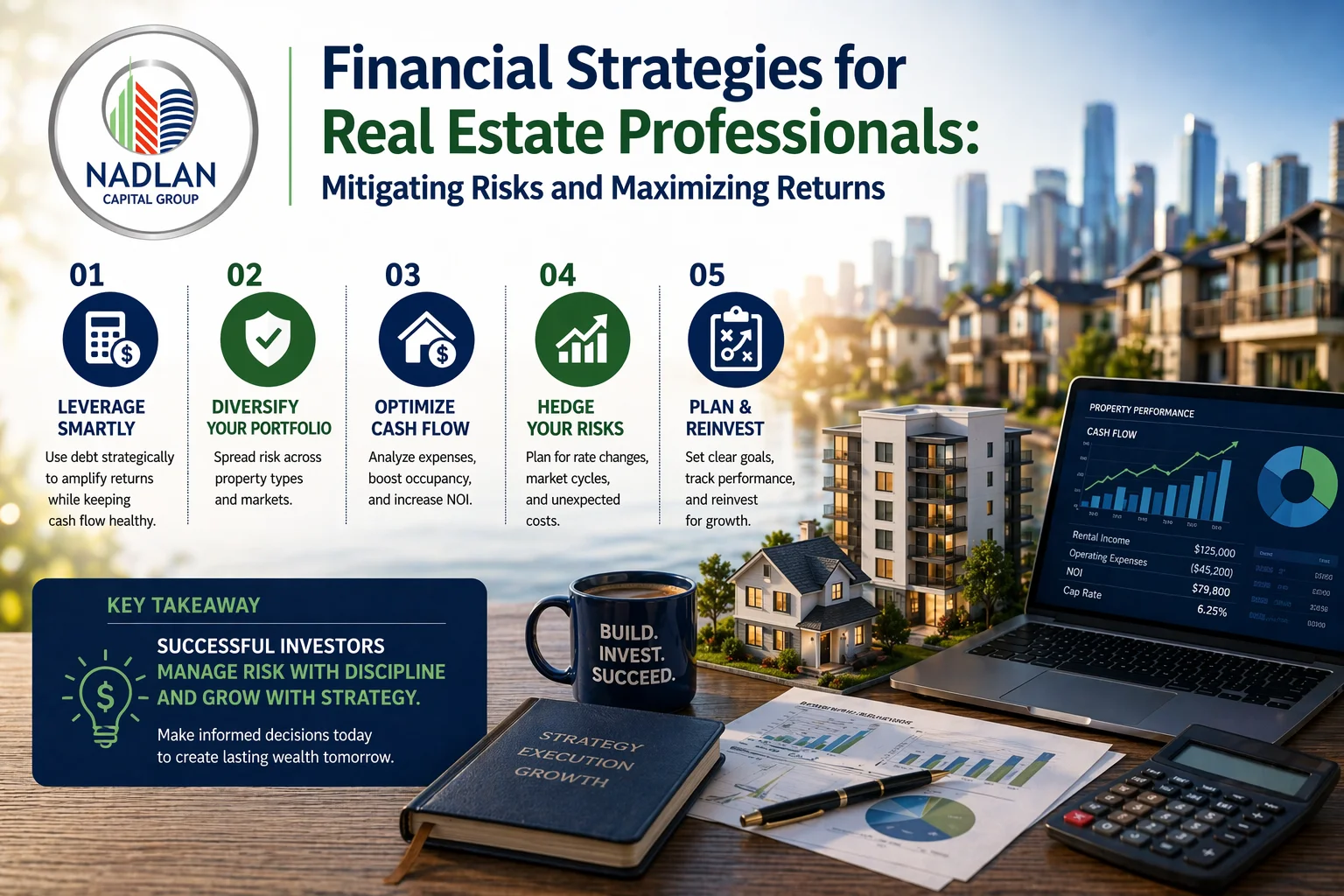
Most real estate professionals face hidden investment risks that quietly drain profits. When your real estate finance decisions miss key signals, your returns shrink fast. This guide reveals financial strategies and property investment tips to help you spot opportunities in real estate while cutting down those costly risks. Keep reading to gain control over your investments and boost your bottom line. For more insights on real estate financial management, explore comprehensive strategies that work.
Understanding the Current Real Estate Finance Environment
The world of real estate finance has shifted dramatically over recent years. Interest rates fluctuate, lending requirements tighten, and market conditions change faster than many professionals anticipate. As someone invested in property markets, you need to understand these moving parts before committing capital.
Real estate finance isn’t just about securing a loan anymore. It’s about understanding cash flow patterns, recognizing market cycles, and positioning your portfolio for both growth and protection. Many investors, especially those new to U.S. markets, find themselves overwhelmed by the complexity of financing options available.
At Nadlan Capital Group, we’ve seen countless investors struggle with these challenges. The good news? Once you grasp the fundamentals and apply proven financial strategies, you can navigate these waters with confidence.
The Financing Options You Should Know
Traditional bank loans represent just one piece of the financing puzzle. Portfolio loans, hard money lending, seller financing, and creative financing structures each serve different purposes in your investment strategy. Foreign nationals often face unique hurdles when seeking U.S. financing, but specialized lenders have created pathways specifically designed for international investors.
Understanding which financing tool fits your specific situation saves time, money, and stress. A fix-and-flip project requires different financing than a long-term rental property. Your credit profile, down payment capacity, and investment timeline all influence which option serves you best.
Identifying and Managing Investment Risks
Investment risks in real estate come in many forms. Market risk, liquidity risk, leverage risk, and operational risk all threaten your returns if left unmanaged. Let’s break down each category so you can build defenses against them.
Market Risk and Economic Cycles
Property values rise and fall with economic conditions. Job growth, population trends, and local development all impact your investment’s value. Smart investors track these indicators before purchasing and throughout their holding period.
You can’t control market cycles, but you can prepare for them. Buying properties below market value, maintaining cash reserves, and choosing locations with strong fundamentals helps cushion against downturns. We always tell our clients at Nadlan Capital Group: the money you make in real estate often depends on the price you pay going in.
Liquidity Challenges in Property Investment
Unlike stocks or bonds, real estate can’t be sold instantly. This liquidity risk means you need adequate reserves to handle unexpected expenses or market timing issues. Many investors get into trouble by overleveraging without maintaining sufficient cash cushions.
Plan for the unexpected. A good rule of thumb involves keeping six months of property expenses in reserves for each investment. This buffer protects you when tenants leave, repairs arise, or market conditions delay a planned sale.
The Double-Edged Sword of Leverage
Financing amplifies both gains and losses. A 20% down payment means you control an asset five times larger than your cash investment. When values rise, your returns multiply. When they fall, losses magnify just as quickly.
Managing leverage risk requires honest assessment of your risk tolerance and financial capacity. Can you handle mortgage payments if the property sits vacant for three months? Six months? What if property values drop 15% and you need to sell? These scenarios might feel uncomfortable to consider, but planning for them separates successful investors from those who struggle.
Operational Risks That Drain Returns
Property management issues, maintenance problems, and tenant troubles represent operational risks. A great property in a strong market can still lose money if managed poorly. Screening tenants carefully, maintaining properties proactively, and building relationships with reliable contractors protects your investment.
For investors living abroad or managing properties remotely, professional property management often makes sense despite the cost. The 8-10% management fee hurts less than the losses from poor tenant selection or deferred maintenance.
Spotting Opportunities in Real Estate Markets
While risks deserve respect, opportunities in real estate abound for those who know where to look. Markets move in cycles, creating windows for smart investors to enter at favorable terms.
Emerging Markets and Growth Indicators
Secondary and tertiary markets often offer better value than major metropolitan areas. Look for cities with job growth, population increases, and infrastructure investment. These indicators signal future appreciation potential before prices fully reflect the growth.
We’ve guided many foreign investors toward markets they’d never considered. Cities like Austin, Nashville, and Raleigh have delivered strong returns over the past decade, often outperforming traditional favorites like New York or San Francisco on a risk-adjusted basis.
Value-Add Strategies That Work
Buying distressed properties, improving them, and either selling or refinancing creates forced appreciation. Unlike hoping the market rises, you directly control value creation through smart renovations and repositioning.
This approach requires more expertise than passive investing, but the returns justify the effort. Start small, learn the process, and scale as you gain confidence. Many of our most successful clients began with a single value-add property and built substantial portfolios from there.
The Power of Creative Financing
Seller financing, lease options, and subject-to purchases open doors that traditional financing can’t. These property investment tips work especially well in slower markets where sellers need solutions more than they need top dollar.
Creative financing requires negotiation skills and legal knowledge, but it can help you acquire properties with little money down while offering sellers benefits they value. Always work with experienced real estate attorneys when structuring these deals.
Building Your Financial Strategy Framework
A comprehensive financial strategy ties together financing, risk management, and opportunity recognition. Think of it as your investment playbook, guiding decisions across different market conditions.
Setting Clear Investment Goals
Define what success looks like for you. Are you building monthly cash flow for retirement? Accumulating equity for long-term wealth? Flipping properties for short-term profits? Your goals shape every other decision in your strategy.
Foreign investors often seek different outcomes than domestic buyers. Some want to move capital into U.S. assets for diversification and stability. Others see real estate as a path toward residency or citizenship. Understanding your primary objective keeps you focused on deals that truly serve your purpose.
Creating a Diversified Portfolio
Don’t put all your capital into one property type or location. Residential rentals, commercial properties, and different geographic markets each respond differently to economic conditions. Diversification smooths returns and reduces overall portfolio risk.
Start with one property type until you understand it well, then gradually expand into complementary areas. A portfolio mixing single-family rentals, small multifamily buildings, and perhaps some commercial space provides balance and resilience.
Cash Flow Analysis and Projections
Every investment decision should start with realistic cash flow projections. Calculate all expenses: mortgage payments, property taxes, insurance, maintenance, vacancies, and management fees. Compare these costs against realistic rental income to determine actual cash flow.
Many investors make the mistake of using overly optimistic assumptions. At Nadlan Capital Group, we encourage conservative projections. It’s better to be pleasantly surprised by strong performance than caught short by expenses you didn’t anticipate.
Tax Planning and Entity Structure
Real estate offers substantial tax benefits, but capturing them requires proper planning. Depreciation, mortgage interest deductions, and 1031 exchanges all reduce tax liability when used correctly.
Foreign investors face additional tax considerations, including FIRPTA withholding and treaty benefits. Working with tax professionals who understand international real estate investment ensures you structure deals optimally from day one. The money you spend on good tax advice returns many times over in saved taxes.
Financing Solutions for Foreign Nationals
As a foreign investor, you face unique challenges in securing U.S. real estate finance. Many traditional lenders won’t work with non-residents, and those that do often impose strict requirements. Understanding your options helps you move forward confidently.
Specialized Lending Programs
Lenders like Nadlan Capital Group specialize in financing for foreign nationals. These programs consider your global financial picture rather than requiring U.S. credit history or tax returns. Down payment requirements typically run higher than for U.S. citizens, often 30-40%, but terms remain competitive.
Interest rates for foreign national loans usually run 1-2% higher than conventional mortgages, reflecting the additional risk lenders assume. This premium decreases as you build a track record with U.S. properties and establish banking relationships domestically.
Documentation Requirements
Expect to provide more documentation than domestic borrowers. Passport copies, proof of foreign income, bank statements, and sometimes translations of foreign documents all form part of the package. Lenders need to verify your identity and financial capacity through alternative means since traditional U.S. credit checks don’t apply.
Starting the documentation process early prevents delays when you find a property you want to purchase. Having your financial documents organized and ready to submit gives you a competitive advantage in fast-moving markets.
Building U.S. Credit and Banking Relationships
Opening U.S. bank accounts and establishing credit history benefits foreign investors planning multiple purchases. Some investors use secured credit cards or small loans to build credit scores, making future financing easier and less expensive.
These relationships take time to develop, so start early. Even if your first purchase uses foreign national financing, building toward conventional loan qualification for future deals makes strategic sense.
Property Investment Tips for Long-Term Success
Success in real estate comes from consistent application of sound principles over time. These property investment tips have served investors well across different market cycles and conditions.
Buy Below Market Value
The profit you make often depends on the price you pay. Look for motivated sellers, distressed properties, or situations where you can solve problems others can’t. Paying market price leaves little room for error and limits your upside potential.
Patience serves you well here. Wait for the right deal rather than forcing purchases just to deploy capital. One great deal beats three mediocre ones every time.
Focus on Cash Flow First
Appreciation is wonderful, but cash flow pays the bills. Properties that generate positive cash flow from day one give you staying power through market downturns. You can hold these properties indefinitely, waiting for optimal selling conditions rather than being forced to sell at inopportune times.
Calculate cash flow conservatively, assuming higher vacancy rates and maintenance costs than you expect. Properties that still cash flow under pessimistic assumptions rarely disappoint.
Know Your Market Intimately
Study the areas where you invest. Understand neighborhood boundaries, school districts, crime statistics, and development plans. This knowledge helps you identify undervalued properties and avoid areas with hidden problems.
For foreign investors, this creates a challenge. Visiting markets personally, working with local partners, and using technology to research areas helps bridge the distance gap. Many successful international investors focus on just one or two U.S. markets, becoming experts rather than spreading themselves too thin.
Build a Strong Team
Real estate investing is a team sport. Agents, lenders, contractors, property managers, attorneys, and accountants all play critical roles. The quality of your team directly impacts your results.
Take time to interview and vet team members. Ask for references, check their track records, and ensure they have experience with your investment strategy. At Nadlan Capital Group, we often connect our clients with trusted professionals in their target markets, helping them build teams faster than they could alone.
Plan Your Exit Before You Buy
Every property you purchase should have a clear exit strategy. Will you hold long-term for rental income? Fix and flip within six months? Hold for several years then sell? Your exit strategy influences everything from financing choice to renovation decisions.
Market conditions change, so remain flexible, but starting with a plan keeps you focused and helps you recognize when circumstances require a strategy shift.
Real-World Success Stories
Theory matters, but seeing how other investors have applied these financial strategies brings the concepts to life. Here are examples from investors we’ve worked with at Nadlan Capital Group.
Case Study: The Foreign National Portfolio Builder
Maria, an investor from Brazil, wanted to diversify her wealth into U.S. real estate. She started with one single-family rental in Florida, using foreign national financing with a 35% down payment. The property cash flowed modestly after all expenses.
Over three years, Maria purchased four more properties using the same approach. She reinvested cash flow and saved additional capital for down payments. By year five, she had built a portfolio generating $4,000 monthly in positive cash flow. The properties also appreciated significantly, adding over $200,000 in equity to her net worth.
Maria’s success came from patient, methodical execution. She didn’t try to get rich quickly. Instead, she focused on solid, cash-flowing properties in stable markets, building her portfolio one property at a time.
Case Study: The Value-Add Investor
James, a U.S. citizen working abroad, wanted to invest back home but couldn’t manage properties hands-on. He focused on value-add opportunities in growing secondary markets, partnering with local property managers he trusted.
His first deal involved a dated duplex purchased below market value. He invested $25,000 in updates, increasing rents by 40%. After stabilizing the property with good tenants, he refinanced, pulling out most of his initial investment while maintaining positive cash flow.
James repeated this process across six properties over four years. His strategy created both immediate equity through forced appreciation and long-term cash flow. The refinancing approach allowed him to recycle capital, acquiring more properties than his savings alone would have permitted.
Case Study: The Conservative Long-Term Holder
David and Lisa, a couple from Canada, wanted stable U.S. assets for retirement income. They avoided risky value-add plays, instead focusing on newer properties in strong school districts that attracted long-term tenants.
They purchased three single-family homes over two years, each requiring 30% down through foreign national financing. The properties generated modest but reliable cash flow. After five years, the combination of appreciation and mortgage paydown increased their equity by over $150,000.
Their conservative approach meant slower growth than aggressive strategies, but it matched their risk tolerance and goals perfectly. They sleep well knowing their properties remain occupied by quality tenants paying down mortgages that will eventually provide substantial retirement income.
Taking Action: Your Next Steps
Understanding financial strategies and investment risks means little without action. Here’s how to move forward, whether you’re making your first investment or expanding an existing portfolio.
Assess Your Current Financial Position
Take stock of your available capital, risk tolerance, and investment timeline. Be honest about how much you can afford to invest and how much risk you can handle emotionally and financially. This self-assessment guides every subsequent decision.
Foreign investors should also consider currency risk and how exchange rate fluctuations might impact returns. Some investors hedge this risk, while others accept it as part of international investing.
Define Your Investment Criteria
Based on your goals and resources, create specific criteria for properties you’ll consider. What markets? What property types? What price range? What minimum cash flow or return on investment?
Written criteria prevent emotional decisions and keep you focused on deals that truly fit your strategy. Review and adjust these criteria periodically as you gain experience and as market conditions change.
Build Your Knowledge Base
Real estate rewards continuous learning. Read books, attend seminars, join investor groups, and learn from those ahead of you on the path. The investment you make in education returns many times over in better decisions and avoided mistakes.
For foreign investors, understanding U.S. real estate law, financing structures, and tax implications requires extra study. Resources specifically addressing international investment in U.S. real estate prove especially valuable.
Connect With Experienced Partners
You don’t have to figure everything out alone. Working with experienced lenders, agents, and advisors accelerates your learning curve and helps you avoid common pitfalls.
At Nadlan Capital Group, we specialize in helping foreign nationals navigate U.S. real estate finance. Our team understands the unique challenges you face and can structure financing solutions that work for your situation. We’ve helped hundreds of international investors achieve their U.S. real estate goals, and we’d welcome the opportunity to discuss how we can help you.
Start Small and Scale
Your first deal doesn’t need to be perfect. Start with something manageable, learn from the experience, and apply those lessons to subsequent investments. Many successful real estate professionals built substantial portfolios starting with a single modest property.
The experience you gain from doing beats the theoretical knowledge from studying every time. Analysis matters, but at some point, you need to act.
Managing Your Portfolio for Sustained Success
Acquiring properties represents just the beginning. Managing them effectively over time determines your ultimate success. These ongoing practices protect and grow your real estate wealth.
Regular Property Reviews
Schedule quarterly or semi-annual reviews of each property’s performance. Compare actual results against projections. Identify trends in expenses, vacancy rates, or rental income. These reviews help you spot problems early and recognize when properties might need repositioning or selling.
For foreign investors managing properties remotely, these reviews become even more critical. Detailed reports from property managers should include financial statements, maintenance updates, and market condition summaries.
Maintaining Strong Tenant Relationships
Good tenants are worth their weight in gold. They pay on time, maintain properties, and stay long-term, reducing your turnover costs and vacancy rates. Treating tenants fairly, responding promptly to maintenance requests, and maintaining properties well encourages tenants to stay.
High tenant turnover destroys cash flow through lost rent, cleaning costs, and advertising expenses. Keeping good tenants happy costs far less than constantly finding new ones.
Proactive Maintenance and Capital Improvements
Deferred maintenance catches up with you eventually, usually at the worst possible time. Budget for ongoing maintenance and address issues promptly. This approach preserves property values and prevents small problems from becoming expensive disasters.
Plan for major capital improvements like roof replacements or HVAC systems before they fail. Setting aside reserves for these predictable expenses prevents cash flow crunches when they arrive.
Refinancing and Portfolio Optimization
As properties appreciate and mortgages pay down, refinancing opportunities emerge. You might lower interest rates, pull out equity for new investments, or consolidate multiple properties under better loan terms.
Review refinancing options annually. Even small interest rate reductions save thousands over a loan’s life. Cash-out refinancing lets you access equity without selling, enabling portfolio growth while maintaining ownership of appreciating assets.
Tax Strategy Reviews
Tax laws change, and your situation evolves. Annual reviews with qualified tax professionals ensure you’re capturing all available deductions and structuring your holdings optimally. Strategies like cost segregation studies, 1031 exchanges, and entity restructuring can significantly reduce tax liability.
Foreign investors should review both U.S. and home country tax implications annually. Tax treaties, withholding requirements, and reporting obligations all require attention to avoid penalties and reduce overall tax burden.
The Role of Professional Guidance
Real estate investing involves complex financial, legal, and operational considerations. Professional guidance helps you navigate these complexities more effectively than going it alone.
Why Specialized Lenders Matter
Generic mortgage brokers often can’t help foreign nationals or don’t understand alternative financing structures. Specialized lenders like Nadlan Capital Group focus specifically on these niches, offering solutions unavailable through traditional channels.
We understand the documentation challenges foreign investors face. We know how to verify income earned abroad, how to structure loans for non-residents, and how to move deals through underwriting efficiently. This expertise saves you time and frustration while opening doors that might otherwise remain closed.
The Value of Local Market Expertise
Even with internet research, nothing replaces local market knowledge. Agents and property managers who live and work in your target market understand nuances that don’t show up in statistics. They know which neighborhoods are improving, which streets to avoid, and what properties represent true value.
Building relationships with local professionals gives you eyes and ears on the ground. For foreign investors especially, these relationships provide critical intelligence that informs better investment decisions.
Legal and Tax Professionals
Real estate law varies by state, and international investment adds layers of complexity. Attorneys specializing in real estate protect your interests through proper contract review, entity formation, and transaction structuring.
Tax professionals with international expertise ensure compliance with both U.S. and foreign tax obligations while minimizing your overall tax burden. The money you invest in quality legal and tax advice prevents costly mistakes and often saves more than it costs.
Your Path Forward in Real Estate Investment
Real estate offers tremendous opportunities for wealth building, but success requires knowledge, planning, and execution. The financial strategies, risk management approaches, and property investment tips outlined here provide a framework for your investment journey.
Whether you’re a foreign national seeking to invest in U.S. real estate, a domestic investor looking to expand your portfolio, or someone just beginning to explore real estate opportunities, the principles remain consistent. Buy smart, finance wisely, manage well, and think long-term.
Investment risks exist in every asset class. Real estate is no exception. But unlike stocks or bonds, real estate gives you direct control over your investment. Your decisions about purchase price, financing, management, and improvements directly impact returns. This control, combined with real estate’s tax benefits and appreciation potential, makes it a compelling wealth-building tool.
At Nadlan Capital Group, we’re passionate about helping investors achieve their real estate goals. We’ve seen firsthand how property investment transforms financial futures. We’ve worked with investors from over 30 countries, helping them navigate U.S. real estate finance and build successful portfolios.
If you’re ready to explore opportunities in real estate or need financing solutions for your next investment, we’d welcome a conversation. Our team can assess your situation, explain your options, and structure financing that supports your investment strategy.
The best time to start investing was yesterday. The second-best time is today. Take the knowledge you’ve gained here, assess your situation honestly, and take that first step. Whether it’s reaching out to a lender, analyzing your first deal, or adding to an existing portfolio, action separates dreamers from achievers.
Real estate rewards those who prepare, act decisively, and think long-term. With the right financial strategies and support, you can build substantial wealth through property investment while managing risks effectively. Your real estate success story starts with a single decision to move forward.
We’re here to help when you’re ready. Reach out to Nadlan Capital Group today, and let’s discuss how we can support your real estate investment goals with financing solutions designed specifically for your needs.